

Food Safety Management System (FSMS)
ISO 22000 Certification
Strengthen your organization with internationally recognized food safety standards that enhance consumer trust, reduce contamination risks, and ensure consistent compliance across your food supply chain.
What is ISO 22000 Certification?
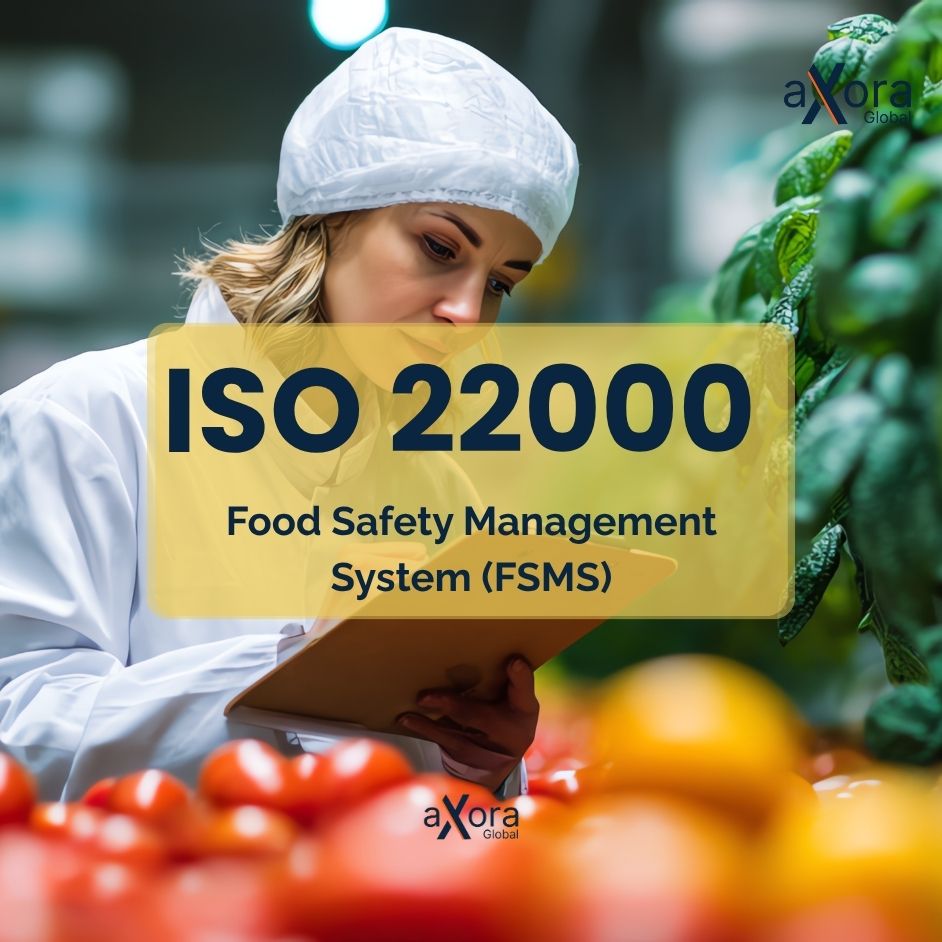
ISO 22000 is a globally recognized Food Safety Management System (FSMS) standard designed by the International Organization for Standardization (ISO). It defines the framework for controlling food safety hazards throughout the entire food chain, from farm to fork.
This standard integrates essential food safety elements, including Hazard Analysis and Critical Control Points (HACCP), prerequisite programs (PRPs), operational control procedures, and continual improvement mechanisms.
ISO 22000 applies to all organizations involved in the food supply chain, including:
• Food manufacturing & processing units
• Packaging companies
• Restaurants & catering services
• Transportation & logistics
• Retailers & distributors
• Agricultural producers
• Food ingredient and additive suppliers
The latest version, ISO 22000:2018, emphasizes a risk based approach, alignment with ISO’s High Level Structure, and strong leadership involvement to ensure food safety at every step.
Why ISO22000 Certification Matters
Food safety is not optional, it is a legal, ethical, and business critical requirement.
Here’s why ISO 22000 is vital for every food related organization:
1. Consumer Safety & Trust
ISO 22000 ensures your products are safe for consumption, helping you eliminate contamination risks and strengthen customer confidence.
2. Regulatory Compliance
ISO 22000 helps you meet local and international food safety regulations, reducing the risk of penalties, recalls, and legal complications.
3. Market Access & Export Qualification
ISO 22000 certification is widely required for exporting food products and participating in global supply chains, leading to new business opportunities.
4. Operational Efficiency
By standardizing food safety processes, organizations minimize waste, human error, and production variation, resulting in consistent product quality.
5. Risk Reduction
The standard requires proactive identification and control of hazards through HACCP methodology, protecting your brand from foodborne incidents.
6. Enhanced Brand Reputation
Certified organizations are trusted by customers, distributors, and regulatory authorities, strengthening credibility and long term business relationships.

Key Principles of ISO 22000
ISO 22000 is built on essential principles that form the foundation of a robust Food Safety Management System:
1. Hazard Control (HACCP Integration)
Identification, evaluation, and control of biological, chemical, and physical hazards using the HACCP methodology.
2. Leadership & Commitment
Top management ensures food safety is a strategic priority through clear policies, roles, and accountability.
3. Risk Based Thinking
ISO 22000 applies risk management at both organizational and operational levels to prevent incidents before they occur.
4. Communication & Transparency
Effective communication across departments and throughout the supply chain is essential for safe food handling and timely corrective action.
5. Process Approach
Managing interconnected food processes ensures consistency, predictability, and measurable results.
6. Prerequisite Programs (PRPs)
Foundational hygiene and sanitation practices (GMP, GHP, hygiene control, maintenance, allergen control, etc.) support safe operations.
7. Continual Improvement
Regular evaluation and improvement of food safety practices help organizations remain compliant and competitive.
Core Clauses and Requirements
ISO 22000:2018 is structured around 10 core clauses:
• Context of the Organization: Understanding internal/external issues, customer requirements, and food safety expectations.
• Leadership: Commitment to food safety policies, roles, and responsibilities.
• Planning: Establishing risk assessment processes, objectives, and preventive controls.
• Support: Competence, communication, infrastructure, and documentation.
• Operation: HACCP plans, operational controls, PRPs, and hazard analysis.
• Performance Evaluation: Monitoring, validation, verification, and internal audits.
• Improvement: Corrective actions and continual process improvement.
These clauses build a complete FSMS that ensures safe food handling from procurement to processing, packaging, storage, and delivery.
Benefits of ISO 22000 Certification
Achieving ISO 22000 certification leads to measurable improvements across your business:
Operational Benefits
• Reduced food contamination and recall risks
• Improved process control and traceability
• Clear documentation and structured workflows
• Integration with other management systems (ISO 9001, ISO 45001, GMP)
Financial Benefits
• Lower operational costs through reduced waste and errors
• Improved resource management
• Enhanced eligibility for high-value contracts and large-scale distribution networks
Reputational Benefits
• Increased customer confidence
• Competitive advantage in local and international markets
• Recognition from regulators, clients, and business partners
• Stronger brand loyalty and trust
ISO 22000 certification is not just a requirement, it is a strategic investment that transforms your food safety culture and business performance.
The ISO 22000 Certification Process with Axora Global
At Axora Global, we ensure a smooth, efficient, and fully compliant certification journey through expert guidance and practical implementation support.
Step 1: Initial Consultation & Gap Analysis
We assess your current food safety practices, documentation, hygiene controls, and HACCP readiness to identify gaps.
Step 2: System Design & Documentation
Our consultants develop all FSMS documents tailored to your operation, including HACCP plans, PRPs, SOPs, policies, and process maps.
Step 3: Implementation & Employee Training
We train your team on hazard control, sanitation practices, food handling, CCP monitoring, and recordkeeping.
Step 4: Internal Audit & Management Review
Our auditors conduct a full internal audit to verify compliance and prepare you for the external certification audit.
Step 5: Certification Audit Coordination
We coordinate with accredited certification bodies (TUV, SGS, Intertek, URS, DNV, etc.) and support you through the audit until certification is issued.
Step 6: Post Certification Maintenance
We assist with surveillance audits, FSMS updates, documentation maintenance, and integration with other standards.

Documentation Provided by Axora Global
When you work with Axora Global, you receive complete ISO 22000 documentation templates, including:
• Food Safety Manual
• Food Safety Policy & Objectives
• HACCP Plan & Hazard Analysis Reports
• Prerequisite Program (PRP) Procedures
• Standard Operating Procedures (SOPs)
• Process Flow Diagrams
• Internal Audit Checklists
• CCP Monitoring Records
• Corrective Action & Risk Registers
• Management Review Templates
Why Choose Axora Global for ISO 22000 Certification?
At Axora Global, we are not just consultants, we are your food safety and compliance partners.
Our Strengths
Accredited Expertise:
Certified ISO 22000 consultants with strong food industry experience.
Tailored Solutions:
Every FSMS is built around your organization’s unique processes and food safety risks.
Fast Implementation:
Proven methodologies that minimize downtime while ensuring full compliance.
Global Network:
Partnerships with accredited certification bodies in Pakistan, UAE, and international markets.
Affordable Packages:
Cost effective solutions suitable for SMEs, food manufacturers, hospitality, and large enterprises.
Ongoing Support:
Continuous improvement guidance even after certification.
We help organizations achieve global recognition through ISO certification and compliance excellence.
From initial consultation to final certification, Axora Global ensures your business meets international standards efficiently and affordably.