

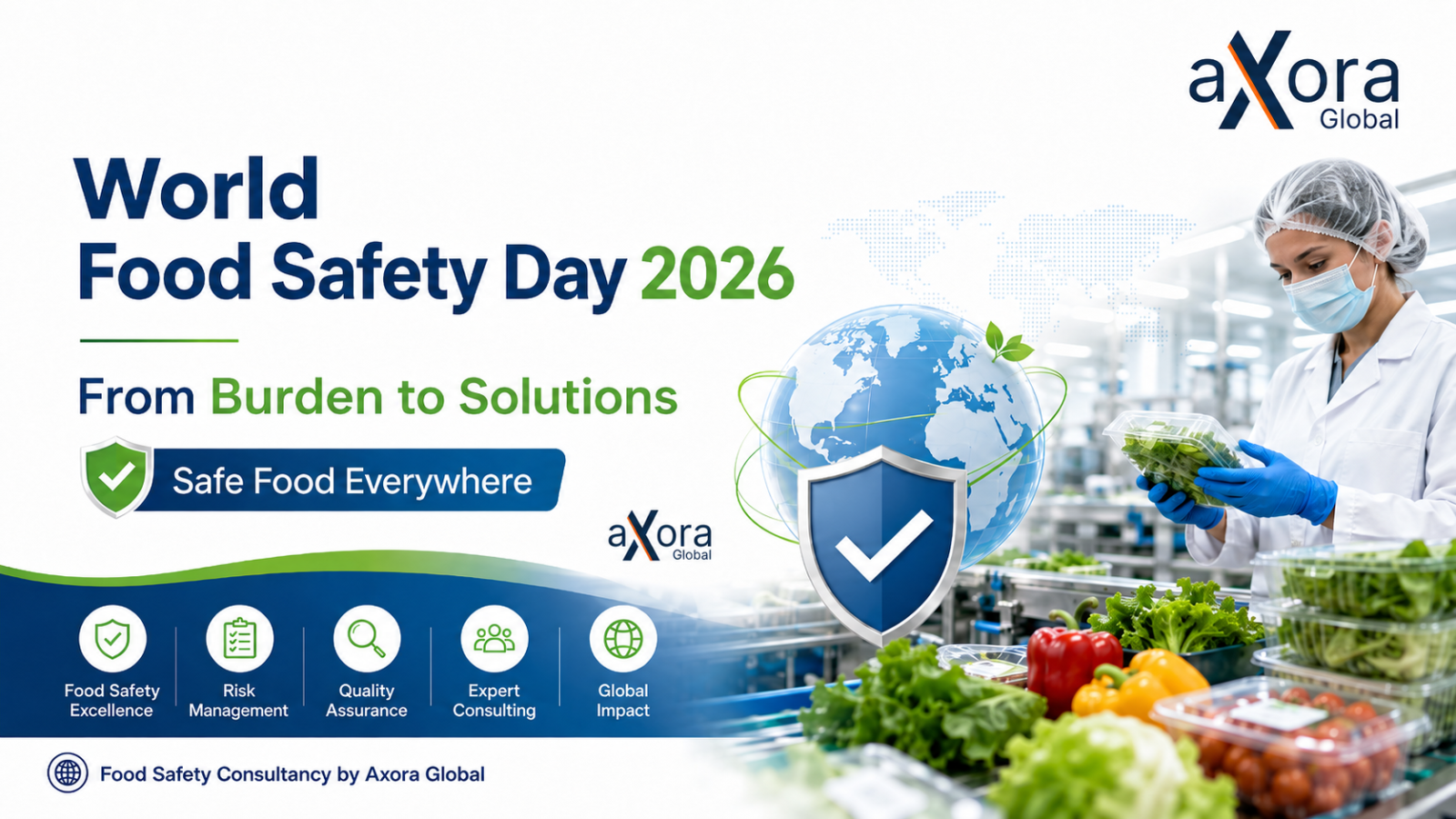
Every year on 7 June, the world observes World Food Safety Day to raise awareness about the importance of safe food and the role it plays in protecting public health, supporting businesses, and strengthening food supply chains.
For food businesses in Pakistan and across international markets, this day is a reminder that food safety is not only a legal or customer requirement. It is a responsibility shared by food manufacturers, processors, restaurants, exporters, distributors, retailers, regulators, employees, and consumers.
Why World Food Safety Day Matters
Food safety affects everyone. Unsafe food can cause illness, damage consumer trust, create product recalls, disrupt supply chains, and harm business reputation. According to the World Health Organization, foodborne diseases remain a major global burden and are largely preventable through effective food safety measures.
World Food Safety Day encourages governments, businesses, and consumers to take action to prevent, detect, and manage foodborne risks. It also reminds food business operators that safer food systems require planning, training, monitoring, documentation, verification, and continual improvement.
Food Safety Is a Business Responsibility
Food businesses have a direct role in keeping food safe. From raw material receiving to storage, processing, packaging, transportation, and final delivery, every step must be controlled properly.
Food safety failures often happen when businesses lack clear procedures, trained staff, hygiene controls, supplier checks, temperature monitoring, cleaning records, traceability systems, or corrective action processes.
A strong food safety system helps businesses reduce these risks and build consumer confidence.
Moving from Burden to Solutions
The 2026 theme focuses on moving from the burden of foodborne illness toward practical and measurable solutions. For food businesses, this means taking action instead of waiting for problems to occur.
Important solutions include:
- Identifying food safety hazards
- Implementing hygiene and sanitation controls
- Training food handlers and employees
- Monitoring critical control points
- Maintaining accurate records
- Improving supplier approval systems
- Strengthening traceability and recall procedures
- Conducting internal audits
- Taking corrective action when issues are found
These actions help businesses prevent contamination, reduce customer complaints, and prepare for food safety audits.
Food Safety Standards That Support Safer Food
International food safety standards provide structured systems for managing food safety risks. They help organizations move from informal practices to documented, monitored, and verified food safety controls.
Common food safety standards and systems include:
- HACCP: Hazard Analysis and Critical Control Points
- ISO 22000: Food Safety Management System
- FSSC 22000: Food safety certification scheme for food supply chains
- BRCGS Food Safety: Global food safety standard for manufacturers and suppliers
- GMP: Good Manufacturing Practices
- Halal compliance: Food safety and religious compliance requirements for halal products
These systems help food businesses control hazards, improve documentation, meet customer expectations, and prepare for third-party audits.
Why HACCP Is Important on World Food Safety Day
HACCP is one of the most important tools for food safety management. It helps businesses identify biological, chemical, and physical hazards and control them at critical points in the process.
For example, a food manufacturer may need to control cooking temperature, metal detection, allergen handling, cleaning procedures, cold storage, or packaging integrity. HACCP helps define where these risks exist and how they should be controlled.
Without HACCP, businesses may rely only on final product inspection. But food safety cannot depend only on checking the product at the end. It must be built into the process from the beginning.
ISO 22000 and Food Safety Management
ISO 22000 provides a complete food safety management system for organizations in the food chain. It combines food safety principles, hazard control, communication, prerequisite programmes, and management system requirements.
For growing food businesses, ISO 22000 can help create better control over operations, documentation, staff awareness, supplier management, internal audits, corrective actions, and management review.
This makes it especially useful for food manufacturers, processors, packaging companies, storage providers, distributors, catering businesses, and other food chain organizations.
Food Safety and Consumer Trust
Consumers expect food to be safe. Buyers, retailers, and international customers also expect food businesses to prove that safety controls are in place.
A strong food safety system helps businesses build trust by showing that they have:
- Documented food safety procedures
- Trained employees
- Controlled hygiene practices
- Approved suppliers
- Traceability records
- Corrective action systems
- Internal audit practices
- Audit-ready documentation
For export-oriented businesses, food safety compliance can also support market access and buyer confidence.
Common Food Safety Gaps in Businesses
Many food businesses have good intentions but weak systems. Some common gaps include:
- No documented HACCP plan
- Incomplete cleaning and sanitation records
- Poor personal hygiene controls
- Weak pest control monitoring
- Lack of allergen control
- Unclear product traceability
- No mock recall practice
- Untrained food handlers
- Missing supplier approval records
- Poor internal audit follow-up
World Food Safety Day is a good opportunity for businesses to review these gaps and take corrective action.
How Food Businesses Can Take Action Today
On World Food Safety Day 2026, food businesses can take simple but meaningful actions to strengthen food safety culture.
Recommended actions include:
- Conduct a food safety awareness session for employees
- Review hygiene and cleaning procedures
- Check temperature monitoring records
- Review HACCP hazards and critical control points
- Verify supplier approval documents
- Update food safety objectives
- Conduct a short internal audit
- Review customer complaints and corrective actions
- Check traceability and recall readiness
- Plan training for food handlers and supervisors
Small improvements can make a major difference when they are implemented consistently.
How Axora Global Supports Food Safety Compliance
Axora Global provides consultancy support to help food businesses implement effective food safety and compliance systems. Our role is to help organizations prepare, document, train, implement, and become audit-ready for relevant food safety standards.
Axora Global supports businesses in areas such as:
- HACCP implementation
- ISO 22000 consultancy
- FSSC 22000 preparation
- BRCGS Food Safety support
- GMP documentation and implementation
- Food safety gap analysis
- Food handler training
- Internal audit support
- Corrective action guidance
- Audit readiness preparation
We also support businesses in preparing for accredited certification through recognized certification bodies. Axora Global does not issue certificates directly; we help organizations build the systems needed to confidently face certification audits.
Final Thoughts
World Food Safety Day 2026 reminds us that unsafe food is a preventable burden. With the right systems, training, monitoring, and leadership commitment, businesses can move from risk to control and from burden to solutions.
Food safety is not a one-day activity. It is a daily responsibility.
For food businesses in Pakistan, this is the right time to review current practices, strengthen HACCP controls, improve documentation, train employees, and prepare for recognized food safety standards such as ISO 22000, FSSC 22000, BRCGS, GMP, and Halal compliance.
Need food safety consultancy support? Contact Axora Global for HACCP, ISO 22000, FSSC 22000, BRCGS, GMP, Halal compliance, training, and third-party certification preparation.
FAQs About World Food Safety Day 2026
When is World Food Safety Day celebrated?
World Food Safety Day is celebrated every year on 7 June.
What is the theme of World Food Safety Day 2026?
The theme of World Food Safety Day 2026 is “From burden to solutions, safe food everywhere.”
Why is food safety important for businesses?
Food safety protects consumers, reduces contamination risks, prevents recalls, supports compliance, and builds customer trust.
Which food safety standards can businesses implement?
Businesses can implement HACCP, ISO 22000, FSSC 22000, BRCGS Food Safety, GMP, and Halal compliance depending on their industry and customer requirements.
Can Axora Global help with food safety certification?
Yes. Axora Global provides consultancy, documentation, training, internal audit, and audit readiness support for food safety standards. We support businesses in preparing for third-party, IAF-accredited certification through recognized certification bodies.
Add a Comment